

A quick, practical 10-step diagnostic checklist to run immediately when your organic traffic plummets, with the action to take for each step.
- Confirm the drop is real and scoped correctly — check multiple data sources and date ranges.
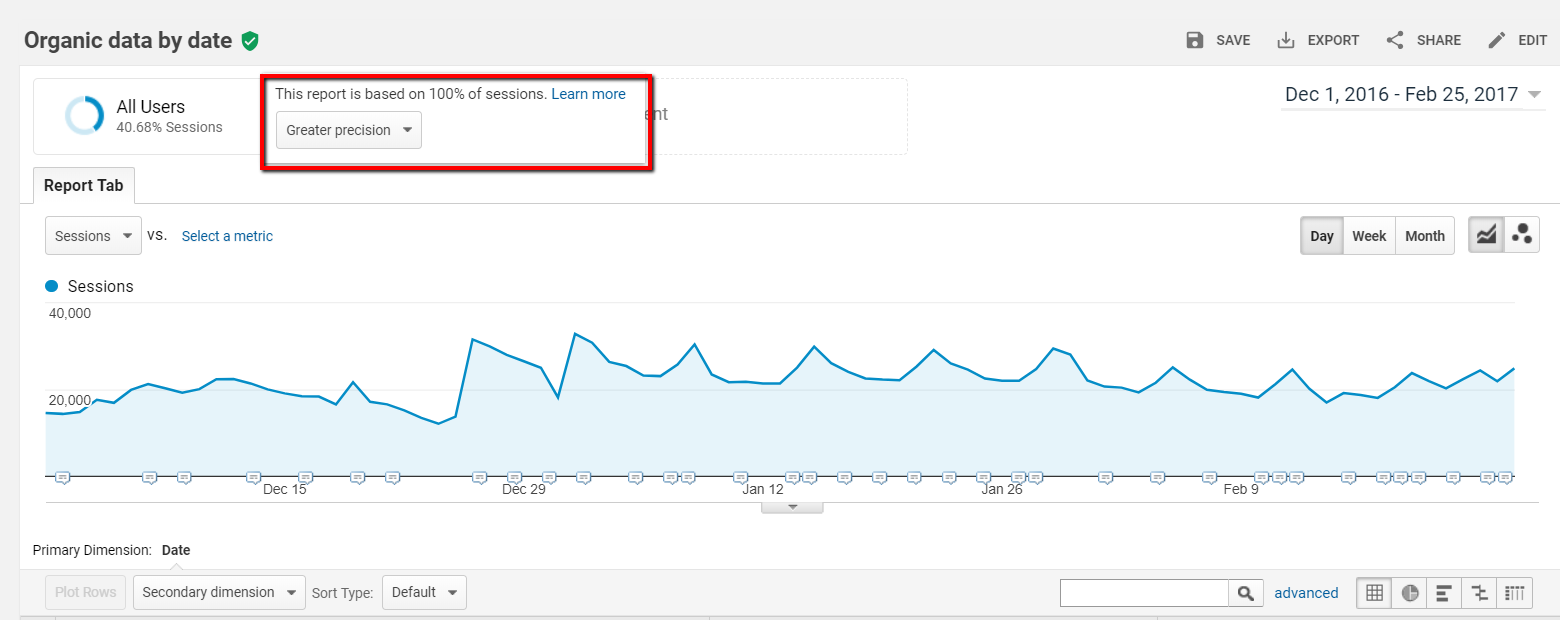
- Verify the decline in your primary analytics (GA4 or Universal Analytics) and compare against Google Search Console (GSC) impressions/clicks to rule out tracking/attribution issues and incorrect date filters. Use weekly and year-over-year comparisons to remove seasonality effects.
- Verify analytics/tracking isn’t broken.
- Confirm your analytics tag (GA4 measurement ID, GTM container, server-side tagging) is present on pages and firing correctly; crawl a sample of pages with Screaming Frog or the Tag Assistant and compare sessions in GA to server logs if available.
- Check for sitewide technical problems (indexing, crawlability, robots).
- Inspect GSC Coverage and Crawl Error reports for spikes in “not indexed,” “noindex,” 4xx/5xx, or blocked by robots.txt; review sitemap submission and robots.txt changes and check for accidental noindex tags or canonical misconfigurations.
- Look for recent site changes, deployments or migrations.
- Ask dev/content teams whether a deploy, redirect, URL structure change, new CDN, SSL change, plugin update, or migration coincided with the drop; verify redirect rules (302 vs 301), canonical tags and that old URLs still resolve.
- Audit page speed and mobile experience.
- Run PageSpeed Insights / Lighthouse and mobile usability in GSC for impacted pages; resolve major performance regressions, render-blocking JS, or layout shifts that can harm rankings and engagement.
- Identify which pages, queries, devices, and locations are impacted.
- Segment traffic by landing page, query (from GSC), device, and geography to isolate whether the decline affects the whole site, a section (e.g., /blog or /product), or specific queries/devices — this narrows root-cause options.
- Check for algorithm updates, SERP feature changes and competitor movement.
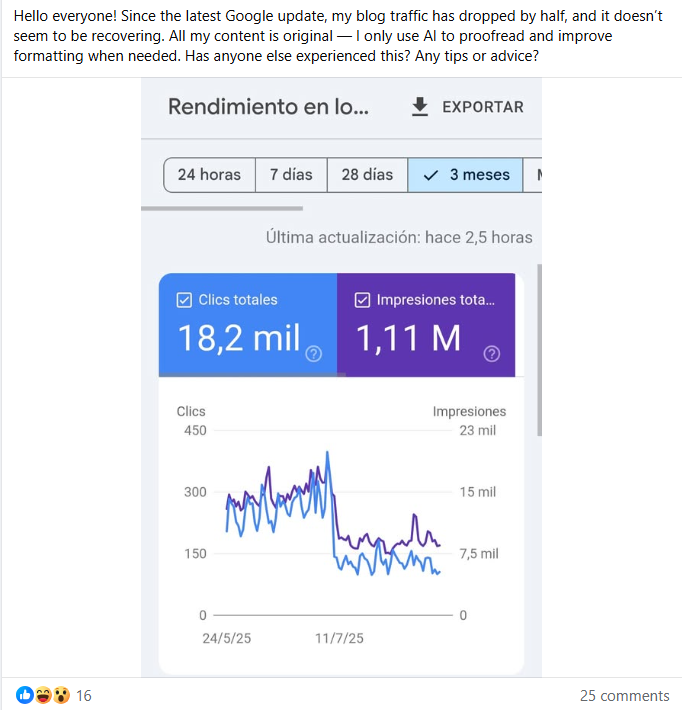
- Compare the drop timing to public algorithm-update trackers and note any new SERP features (snippets, SGE/AI features) or competitor content improvements that could have displaced your pages.
- Review content quality and search intent fit for affected pages.
- For pages that lost traffic, compare against current top-ranking pages for depth, accuracy, freshness, formatting, E‑A‑T signals, and whether intent shifted (e.g., informational → transactional). Update or consolidate thin/duplicated content accordingly.
- Inspect backlinks and off‑site signals.
- Check for a sudden loss of important backlinks or a spike in toxic links that might correlate with traffic loss; use your backlink tool to spot major link removals or declines in referring domains.
- Check for security/manual actions and suspicious traffic.
- In GSC, verify there are no manual actions or security issues (hacks, malware). Also review analytics for spam/referral anomalies or bot traffic distortions that could skew reporting.
Quick priority workflow to run these steps in the first 24–72 hours
- Immediate (0–24h): Steps 1–4 and Step 10 (confirm, tracking, recent deploys, manual/security).
- Short term (24–72h): Steps 5–8 (tech, UX, segmentation, content quality).
- Follow-up (72h+): Step 9 and implement recovery plan (content updates, technical fixes, backlink outreach, monitoring).
Monitoring & measurement tips
- Correlate fixes to GSC impressions and organic clicks rather than sessions alone, and track ranking and CTR changes per page.
- Keep a timeline (deploys, fixes, detected issues) to match actions to recovery signals.
If you’d like, I can:
- Turn this into a printable checklist with step-by-step commands and tools (Screaming Frog, GSC, PageSpeed, Ahrefs/SEMrush) or
- Run a targeted checklist for a specific URL or site section if you share the affected pages and whether you use GA4 and GSC.
.jpg)













Maple Ranking offers the highest quality website traffic services in Canada. We provide a variety of traffic services for our clients, including website traffic, desktop traffic, mobile traffic, Google traffic, search traffic, eCommerce traffic, YouTube traffic, and TikTok traffic. Our website boasts a 100% customer satisfaction rate, so you can confidently purchase large amounts of SEO traffic online. For just 720 PHP per month, you can immediately increase website traffic, improve SEO performance, and boost sales!
Having trouble choosing a traffic package? Contact us, and our staff will assist you.
Free consultation